Client Challenge
McDonald’s Canada wanted to know two things:
- Measure the effectiveness of community-centred campaigns like Free Coffee and McHappy Days on consistent, long-term brand lift, specifically for their McCafe.
- Measure brand loyalty amongst competitors
Increased Customer Engagement & Brand Presence
askpolly compared McDonald’s coffee campaigns with other competitors in Canada by analyzing the share of voice each brand had in consumer conversations over a 12-month period. Using the average engagement as a baseline, Polly isolated campaign dates and determined whether the increases in engagement were driven by campaigns or external factors. Polly also analyzed the level of engagement each brand saw after their campaigns.
Tim Hortons and Starbucks Campaign Fatigue
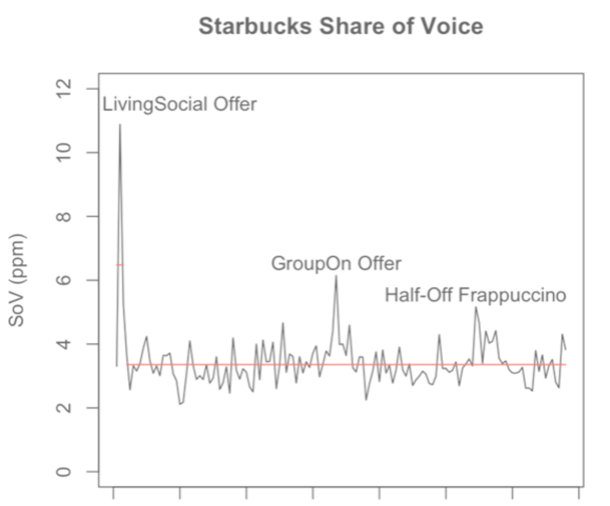
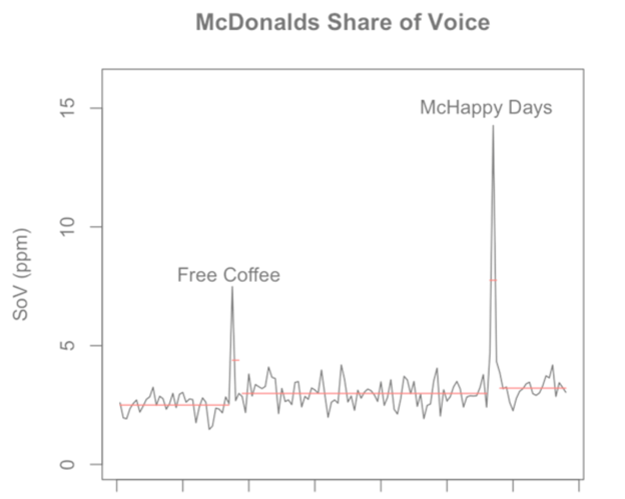
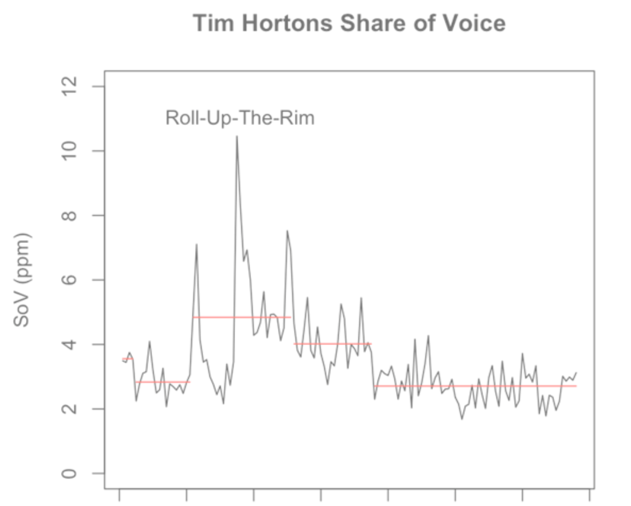
McDonald’s was the only brand whose campaign created a sustained increase in engagement and brand lift beyond the promotion window. Tim Hortons and Starbucks saw short-term spikes, but engagement quickly returned to baseline levels.
Polly Reveals the Depth of Brand Commitment
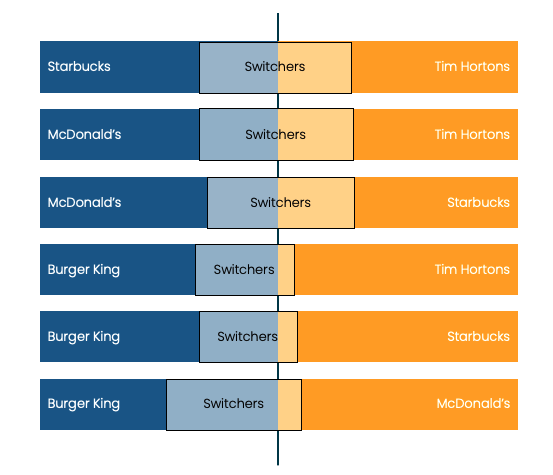
Polly built custom audiences of loyalists for each brand and tracked brand-switching behaviour by measuring:
- How far people would travel to have their preferred brand
- Whether they sought out a specific product or were simply satisfying a general craving.
- Patterns of mention overlap and affinity between the three competing brands.
McDonald’s Pulls Loyalty Where Competitors Can’t
Polly showed that Canadian consumers view Starbucks and Tim Hortons as direct competitors, and McDonald’s and Burger King as direct competitors. McDonald’s and Burger King compete more broadly on QSR offerings — but in one direction: Burger King loyalists view McDonald’s as a strong alternative, while the reverse is not as strong. While for the coffee product, there are far more brand switchers, McDonald’s loyalists slightly favour McDonald’s coffee over Starbucks.
Knowing When to Refresh: The Lifecycle of Annual Campaigns
Polly helped identify how many years a recurring campaign can run before audience fatigue sets in. By tracking brand switching behaviour over time, Polly revealed when long-running annual promotions start to lose their impact.
Tim Hortons Fades, McDonald’s Sustains
Polly uncovered that McDonald’s annual promotions were better timed and more resilient to consumer fatigue than those of key competitors. While Tim Hortons’ Roll Up the Rim had historically driven strong engagement, Polly’s multi-year analysis showed that the campaign began to lose its effectiveness over time — with fewer consumers willing to actively participate or go out of their way for it in later years.
Result
Polly’s insights gave McDonald’s a clear path to sustaining brand momentum in a crowded, competitive market.
By striking the right balance of timing, tone, and community relevance, McDonald’s succeeded where others faltered. While competitors saw diminishing returns from overused or fatigued campaigns, McDonald’s promotions continued to drive both new
customer acquisition and long-term engagement. Consumers weren’t just more willing to try McDonald’s — they were more likely to stay, turning one-time switchers into lasting loyalists.