Discussions about mistrust in the media often revolve around whether or not the media is biased. But I’m not sure that is the right question. The deeper issue may be that people simply don’t see their own concerns reflected in what gets covered. There is a quiet but corrosive feeling that certain people’s concerns are not considered valid enough to make the front page. And in a democracy where every person holds an equal vote, that feeling has consequences worth taking seriously.
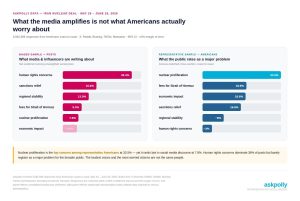
Let me give you a concrete example. I surveyed a representative sample of four and a half million Americans over the last month, asking what their biggest concerns are with the current deal on the table with Iran. I then compared what that representative group said to what media and influencers have actually been writing about. We call that second group the “Biased Sample” because it reflects what most people see in their feed every day and mistake for a consensus. The important thing to understand about askpolly is that she samples across social bubbles, which means she has what we call algorithmic immunity. She does not just hear from one corner of the internet.
Check out what she found. The graph on the left shows what the biased groups on social media say are the biggest issues with the deal. The graph on the right, in blue, shows what a representative cross-section of Americans actually thinks. What do you notice? Tell me in the comments.